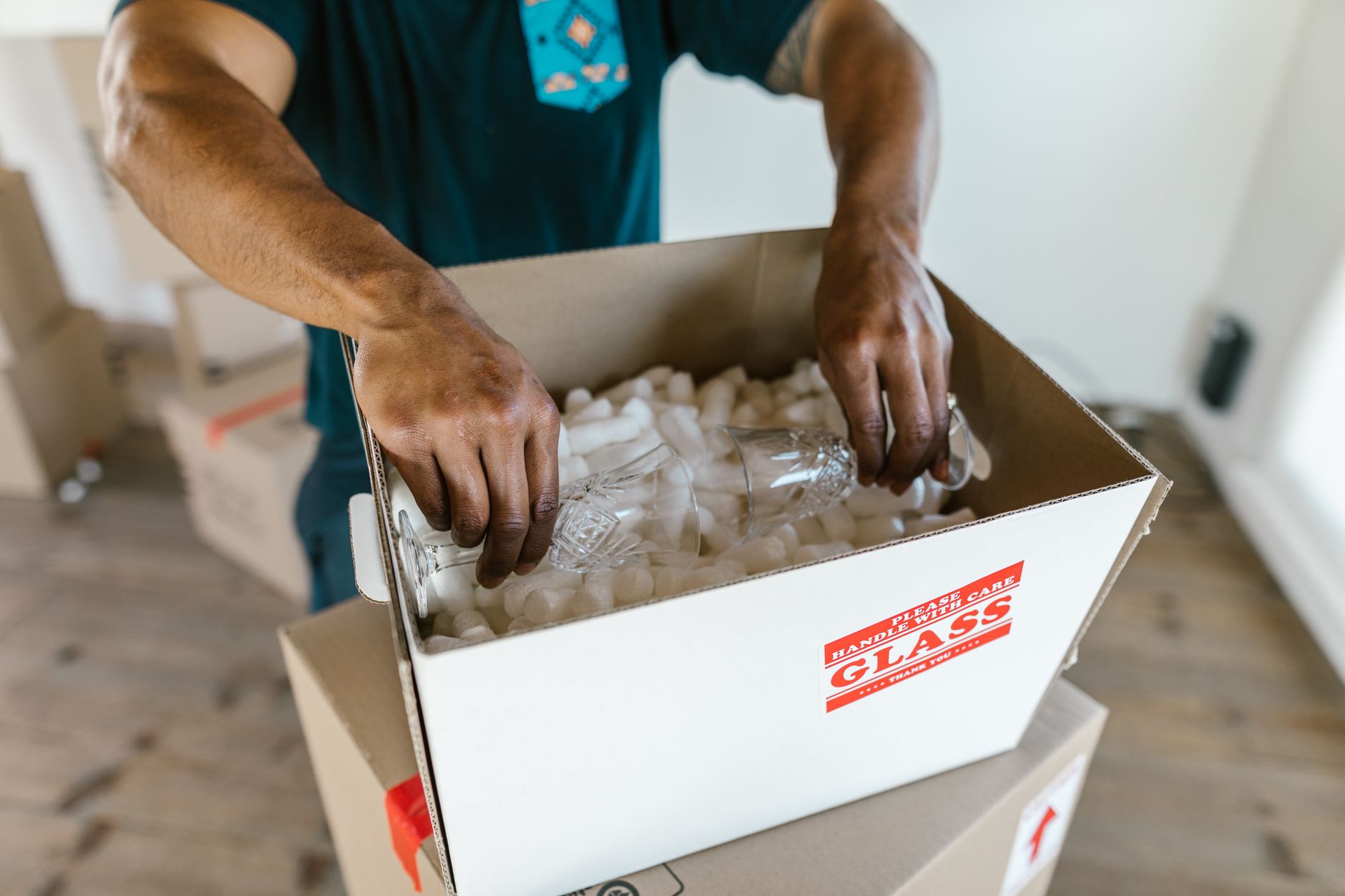
“Whatever the situation is, we need to come to terms with our stuff and make it a safe environment. If we are staying in the home, let’s cull through the things that we own and make sure that they are still serving our needs. The piles pile up because the storage spaces are too full. Every horizontal surface is a magnet for stuff. We actually only use about 20 percent of the things we own.”
Families eventually reach a crossroads when a house starts feeling harder to manage. The stairs feel a little steeper. The hallways feel a little narrower. The sheer volume of memories packed into every closet begins to feel less like a comfort and more like a heavy weight. When mobility changes or care needs increase, homeowners usually face 3 choices: organize, modify, or move.
Many people assume they need to spend thousands of dollars remodeling a house to make it safe. They start looking at expensive walk-in tubs or major construction projects. Organization should actually be your very first step. Simply rethinking how a space is used can solve a massive number of daily frustrations. We have sat at a lot of kitchen tables with families trying to figure out their next steps, and we always recommend looking at the stuff inside the house before tearing down any walls.
The 20 Percent Rule (Why We Drown in Our Own Things)
Americans are highly materialistic, and we accumulate a staggering amount of belongings over a lifetime. Statistics show we only use about 20 percent of the things we own. You should let that number sink in for a minute. The vast majority of the items filling up your cabinets, basement, and garage are just taking up space.
Part of this comes from generational habits. Children of the Depression era were taught to save absolutely everything. They reused butter tubs for food storage. They kept bread bags just in case they needed them later. They passed that “waste not, want not” mentality down to their own children. Keeping everything feels responsible at the time. It eventually becomes a physical burden that creates hazards in the home.
The Hidden Cost of Stacking
We often see a specific organizing profile we call the cramer-jammer-stacker. This is a person who does not want to deal with an item, so they just shove it into a closet, a spare room, or down in the cellar. The immediate problem is solved because the item is out of sight. The long-term problem is that they completely forget where they put it.
This habit actually costs real money. We recently worked with a homeowner who owned 4 weed whackers. 1 was in the garage. 1 was in the shed. The others were buried so deep behind boxes that they were completely inaccessible. Because the homeowner could not find the tool when they needed it, they just went to the store and bought another 1. The time spent looking for lost items is frustrating, and the money spent rebuying things you already own is entirely preventable.
Rethink the Kitchen for How You Cook Today
When you raise a family in a house, your kitchen is set up for volume. You might have a dozen plates and a dozen bowls stacked on the shelves. Your cooking habits change as the years go by. You are likely cooking for 1 or 2 people now, which means you only need 4 plates in your daily rotation.
The things you use every single day need to be incredibly easy to access. Excess storage is often wasted on those 8 extra plates that never see the light of day. You should pack those extra dishes up and move them out of the kitchen entirely, or at least move them to the very highest shelves. This frees up the prime real estate for the items you actually need.
The Waist-Level Rule
Kitchen organization for older adults comes down to 1 simple concept. The items you use every single day should be stored at waist level, or just slightly higher. We want to completely avoid the use of step stools. We also want to avoid forcing anyone to bend over and reach deep into lower cabinets.
Look at your current lifestyle needs. Figure out exactly which pots, pans, and utensils you use to make your standard meals. Move those specific items front and center. Everything else can be donated or relocated. Making that prime, easy-access space highly functional will immediately make the kitchen safer.
Clear the Pathways and Prevent Falls
Excess stuff creates hazardous pathways. When storage spaces get too full, items naturally spill out into the living areas. Piles begin to form on the floor, shrinking the walkable space in hallways and bedrooms. You must clear these aisles.
Rugs are 1 of the biggest tripping hazards in any home. You might not use a wheelchair or a walker right now, but you might need 1 someday. Removing decorative rugs creates a smooth, clear surface that prevents accidental falls. You want to make every main artery of the house easily accessible.
Every horizontal surface in a home acts like a magnet for clutter. Dining tables, entryway consoles, and kitchen counters quickly disappear under stacks of mail, magazines, and random objects. You need to cull these piles aggressively. Donate what you can. Own less. Keeping those surfaces clear makes the entire house feel more manageable and significantly reduces the risk of knocking things over.
Simple Modifications That Cost Almost Nothing
You will often find that physical modifications are necessary to make a house safe. These do not have to be high-dollar items. Sometimes the simplest, lowest-cost fixes make the biggest impact on daily living.
Look at your hall linen closet. If the shelves are too high to reach comfortably, the fix is incredibly easy. You just need to move the shelves down a few inches. Task lighting is another cheap upgrade. Adding a small, bright light to a dark closet or pantry can help you find exactly what you need without straining or digging through boxes.
Safer Bathrooms and Easier Laundry
Laundry is a major physical hurdle for many older adults. Carrying a heavy laundry hamper down a long hallway and around a corner to the laundry room requires a lot of balance and strength. Buying a simple laundry hamper on wheels solves this problem instantly. You can just roll the clothes right to the washing machine.
Bathrooms require careful attention. Walking across a slippery tile floor while wet is incredibly dangerous. You can install simple towel hooks on the wall directly outside the shower door. This allows you to grab your towel and dry off before you ever step onto the slick floor. You might also consider moving daily medications out of the bathroom entirely. Storing them in a kitchen cabinet near your coffee maker often makes them much easier to access.
Repurposing Rooms for Single-Floor Living
Multi-level homes present a massive challenge as we age. Stairs eventually become difficult, if not entirely impossible, to navigate safely. If you want to stay in your home, you have to ensure that all your essential needs are met on 1 floor.
This requires rethinking how you use your rooms. We frequently see homeowners convert a main-floor office or den into a primary bedroom. Bringing the sleeping quarters downstairs eliminates the daily risk of climbing steps. You might need to do some light remodeling to accommodate this, but it is far cheaper than moving to a new facility.
Doors can also become an unexpected impedance. We once worked on a project for a homeowner who used a wheelchair. The doors in the hallway made it impossible for them to easily access their closet because of the way the door swung open. We simply removed the door from its hinges. The homeowner did not want to look at their stored items all day, so we hung a nice curtain over the frame instead. It was a fast, cheap fix that made getting in and out much easier.
The Boat Method for Keeping What Matters
Some of the best organizers in the world are boat owners. Space on a vessel is incredibly tight, which forces a strict discipline. If you take the salt shaker down to use it, that salt shaker goes exactly back to its designated spot when you are done. You also only keep 1 set of salt shakers on board. You do not need 10.
Applying this boat method to a large house is difficult, especially when sentimental items are involved. We often hold onto things simply because they trigger a memory. During 1 cleanout, a homeowner found a tiny baby dress in her mother’s closet. She could not figure out why her mother had kept it for decades. It turned out to be the very first dress the mother was ever photographed in as a toddler. The mother then pointed to a framed picture on the wall showing her wearing that exact dress.
This raises a tough question. Why do you feel the need to hold onto the physical dress when you already have the beautiful photograph of it on your wall? The memory lives in the photo and the story, not in the fabric taking up space in a dark closet. Learning to let go of the physical objects while keeping the memories is the hardest part of downsizing.
If you are feeling overwhelmed by a house full of memories and are wondering what your options are, we are always here to help you run the numbers and talk it through.